
White residue at the base of lash extensions is a question many clients ask during a routine check-in. It can be unsettling to see a pale film right where the extensions meet your natural lashes, and it’s common to wonder whether it signals a problem or is simply a byproduct of daily care. This guide unpacks what that white buildup may be, how to tell when it’s harmless versus when it needs professional eyes, and practical steps you can take to prevent it while protecting the health of your natural lashes. By the end, you’ll have a clear framework for evaluating residue, adjusting routines, and communicating with your lash artist to keep results looking precise and comfortable.
At Estetica, we recognize that every client’s lash life is unique—lifestyle, lash health, and aftercare all shape what you see at the base of your extensions. This article aims to give you concrete, actionable guidance rather than generic reassurance. You’ll learn common causes, learn how to diagnose the likely culprit, and discover a straightforward plan to minimize residue without compromising retention or lash health. If irritation or persistent issues arise, a professional assessment is always the safest next step to protect your eyes and your investment.
What white residue at the base of lash extensions actually is
Visual cues: distinguishing residue from debris
White buildup near the lash line can take several forms: a soft film that dries clear or pale, a chalky layer that feels powdery, or small crusty specks at the base where extensions curve from the lid. The appearance alone isn’t enough to diagnose the cause, but it helps you decide whether simple cleansing is likely enough or if you should seek a professional check. If the film is dry, easily wiped away with a clean fingertip or cotton swab, it’s more likely related to cleansing or product residue. If it’s accompanied by itching, redness, or swelling, it may indicate irritation or a reaction that warrants expert attention.
Irritation vs. simple buildup
Not every white film signals a problem, but it’s wise to observe accompanying symptoms. Persistent itching, burning, tearing, or eyelid swelling alongside residue is a cue to pause home care and consult your lash artist or a clinician. In some cases, what looks like residue may be an early sign of adhesive sensitivity or a local skin reaction around the lash line. For safety, when irritation exists, avoid rubbing or pressing on the area and seek professional guidance promptly.
Residue at the base isn’t automatically a disaster, but it can be a clear signal that a tweak in cleansing or product use is in order.
Common culprits behind the white buildup
Oil-based skincare and removers
Oil-based products near the eye area can leave a faint, whitish film as they mix with sweat and natural oils. This is especially true if a client uses heavy eye makeup removers, facial moisturizers, or serums that aren’t strictly oil-free around the lash line. Over time, this film can accumulate at the base of extensions and render lashes look less crisp. Importantly, oils can also weaken the adhesive bond if they migrate onto the bond line, so many artists recommend oil-free cleansers and careful product placement to preserve retention.
Improper cleansing or rinsing
A buildup can form when cleansing routines aren’t thorough enough or when rinsing isn’t complete. Residue from cleansers, micellar water, or tap water minerals can dry into a pale film at the base. This is especially likely if clients use aggressive scrubs, rough towels, or rub the eye area vigorously. A gentle, targeted cleanse with an oil-free formula, followed by a careful rinse, tends to reduce this type of residue and helps maintain lash clarity between appointments.
Adhesive bloom or humidity-related effects
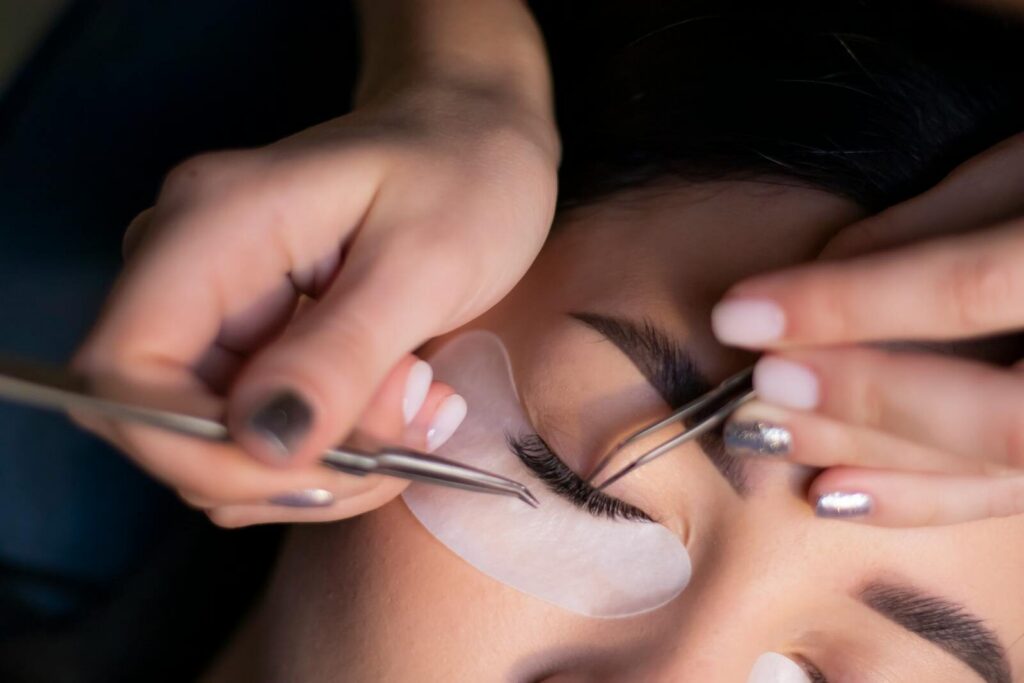
Adhesive bloom refers to a white or hazy film that can appear at the base of lash extensions when cyanoacrylate-based glues interact with moisture during curing. Humidity and temperature swings can influence how the glue dries, and a light bloom may form even with a well-executed set. This isn’t a failure of the procedure, but it can look like residue if it remains at the base. A well-ventilated, controlled appointment environment helps minimize bloom, and a quick post-appointment wipe with a clean, oil-free cloth can often restore a neat base line.
Natural shedding and buildup around the lash line
Natural lash shedding is a continuous process. As old lashes shed and new ones come in, tiny deposits of natural oils, dead skin cells, and environmental dust can accumulate along the lash line, occasionally forming a pale layer at the base. This type of residue tends to be intermittent and varies with your shedding cycle, skin health, and daily habits.
White film from adhesive bloom or natural buildup isn’t inherently dangerous, but it’s worth normalizing routines that keep the base clean and comfortable.
Diagnosing the cause: how to tell yours apart
Timing and pattern
Consider when you first notice the residue and whether it’s tied to a recent appointment, product change, or routine shift. New residue that appears within the first 24 to 48 hours after a fill may relate to adhesive curing or bloom, while residue that appears weeks later might point to cleansing practices, skincare products, or environmental buildup. Tracking when it appears in relation to your last appointment can help your stylist pinpoint the most likely cause.
Signs that warrant a professional check
Beyond visible residue, watch for persistent itching, redness, or swelling around the eyelid. If the residue sticks to the glue line or causes lashes to lift unevenly, it’s a good idea to schedule a quick evaluation with your lash artist. A professional can assess adhesive integrity, lash health, and whether a fix—such as a light re-lash or a removal and retreatment—is appropriate. For eye safety guidance, consult a medical professional or ophthalmology resource if irritation persists.
A quick action plan if you spot white residue
- Pause introducing any new products near the eyes until you know the cause.
- Review ingredients and switch to an oil-free, lash-safe cleanser designed for extensions.
- Gently cleanse the lash line with the recommended product, then rinse thoroughly with lukewarm water.
- Avoid rubbing, tugging, or sleeping face-down on a pillow that presses the lashes together.
- Keep your hands away from the eye area to minimize transfer of oils and debris.
- Book a check-in with your lash artist to assess adhesive integrity, natural lash health, and whether a retreatment is needed.
Prevention and ongoing care: long-term habits to keep residue away
Cleaning routine that respects the bond
Establish a gentle, oil-free cleansing routine that targets the lash line without soaking the eyes. Use a cleanser formulated for lash extensions, apply with a light finger massage along the lash line, rinse with clean water, and pat dry. Consistency matters more than intensity—regular, mild cleansing helps keep debris and buildup from accumulating at the base.
Product choices and placement
Choose skincare and makeup products labeled as oil-free or extension-safe. Apply products away from the lash line when possible, and avoid rubbing or smearing products across the base of extensions. If you wear mascara, apply only to the tips of the extensions or consider mascara-free looks when appropriate for your lifestyle and maintenance schedule.
Lifestyle tweaks that support lash health
Spooning in a clean pillowcase and avoiding sleeping on the face can reduce mechanical stress and oil transfer to the lash line. If you swim or sweat heavily, rinse after activities and consider a quick refresh before photos or events. These small changes can help minimize residue and support a cleaner base between fills.
Small, consistent care beats dramatic scrubs. A steady routine reduces buildup and preserves both the look and health of your extensions.
Professional assessment and what to expect
If you notice persistent white residue that doesn’t clear with a routine cleanse, or if you experience symptoms such as itching or irritation, a professional assessment is the right next step. A lash artist will examine the bond line, the health of your natural lashes, and the overall maintenance plan. They may adjust cleansing recommendations, switch adhesive formulations, or discuss retreatment timing based on your lash cycle and lifestyle. For safety considerations related to lash extensions and eye health, you may also consult ophthalmology resources such as the American Academy of Ophthalmology for general guidance on eye hygiene and safety, and DermNet NZ for a broad overview of eyelash extensions and related care.
Remember, results can vary depending on natural lash health, how you care for lashes between appointments, and how well you adhere to aftercare guidelines. A precise base and clean maintenance routine often go hand in hand with a well-muited lash style, adhesive choice, and appointment cadence. If you’re unsure where to start, a consult with Estetica’s lash specialists can help tailor a plan to your eye shape, lifestyle, and desired maintenance level.
If you notice persistent white residue or related discomfort, book a consult with your lash artist. A focused in-person assessment can confirm whether the base buildup is simple residue, a minor adhesive issue, or something that requires a retreatment or a change in care routine. Your eyes deserve clear, attentive care—and a plan that keeps your lash health front and center.