
How to Fix a Bad Lash Extension Set Without Starting Over is a question many clients bring into Estetica after a treatment that didn’t meet expectations. You may be dealing with clumped strands, uneven gaps, or lashes that feel heavy and overworked. The instinct to “start fresh” is strong, but in many cases a precise, professional repair can salvage the look while preserving natural lash health and avoiding a full rebuild. This guide walks you through a realistic, safety-minded plan so you can approach a correction with confidence and clarity.
By the end, you’ll know what to assess, how to talk to your lash artist about targets, and the practical steps a skilled clinician can take to tighten isolation, correct shape, and restore balance without ripping out everything and starting over. You’ll also learn what aftercare to adopt in the days following a repair and when it might actually be wiser to book a full fresh set. The goal is honest, technique-focused guidance that respects your eye health and lifestyle while delivering a refined result.
Why a Bad Lash Set Happens — and when a repair is worth pursuing
Poor isolation or clumping
When extensions are not isolated from neighboring natural lashes, you can end up with a stringy, uneven line or a look that reads “bunched.” This often happens if the technician tries to speed through a service or if the client has particularly dense natural lashes in certain areas. A repair should first address these clusters, re-establish clean isolation, and re-map the lash line so the result reads as a natural extension of your eye shape rather than a stacked fringe.
Adhesive overuse or improper curing
Excess glue or a bond that didn’t fully cure can create drag, flaking, or lash-to-lash sticking. In many cases, a targeted removal of problematic bonds and careful re-lashing in gaps is enough to restore a smooth line. It’s not a universal fix for every problem, but when the issues are localized, a skilled lash artist can recalibrate the adhesive use and timing for a healthier result.
Lash health and natural cycle variability
Your natural lash cycle (growth, shedding, and renewal) influences how a set sits and how long it lasts. If lashes are mid-shedding or are naturally very fine, a poorly planned set can look inconsistent. A repair approach acknowledges these cycles and focuses on optimizing the set for your current lash health rather than forcing a one-size-fits-all appearance.
“Two key ideas guide a good repair: focus on targeted corrections that respect natural lash health, and avoid full removal unless it’s clearly necessary.”
Repair vs Restart: how to decide what’s right for you
When a repair makes sense
A repair is appropriate when the problems are localized—such as a few misaligned clusters, gaps that can be filled, or a few lashes that have shed early. It’s particularly viable when your natural lashes are healthy overall and you’re happy with the overall shape, curl, and density. In many cases, a partial correction can restore harmony with less downtime, lower risk, and a shorter commitment to maintenance.
When a full restart is the realistic choice
If the set shows widespread misalignment, heavy clumping across large portions of the lash line, or damage to many natural lashes from heavy extensions or aggressive removal, a full removal and rebuild often yields a cleaner, safer outcome. If the health of your natural lashes has been compromised, or you’re consistently back for fixes, your lash artist may recommend starting fresh to re-establish a balanced baseline.
“Preserving natural lashes is the priority; if you notice thinning or irritation, pause and consult your technician before proceeding with any further adjustments.”
A practical, step-by-step plan to fix without starting over
- Book a correction appointment with a licensed lash artist who specializes in corrective work and wants to understand your goals. Explain what you don’t like and what you’d like to see improved (shape, isolation, density, or overall balance).
- Start with a candid health check. The artist should review lash health, signs of over-processing, and any irritation or sensitivity. If there are signs of reaction (redness, itching, tearing), address those before proceeding with any lash work.
- Assess bridging and isolation. Identify which clusters are misaligned or overlapping, and determine how many natural lashes need adjustment to create a clean anchor for a corrected set.
- Plan targeted removal. The goal is to remove or adjust only the problematic areas, not to strip every extension. This keeps natural lashes intact and reduces downtime for you.
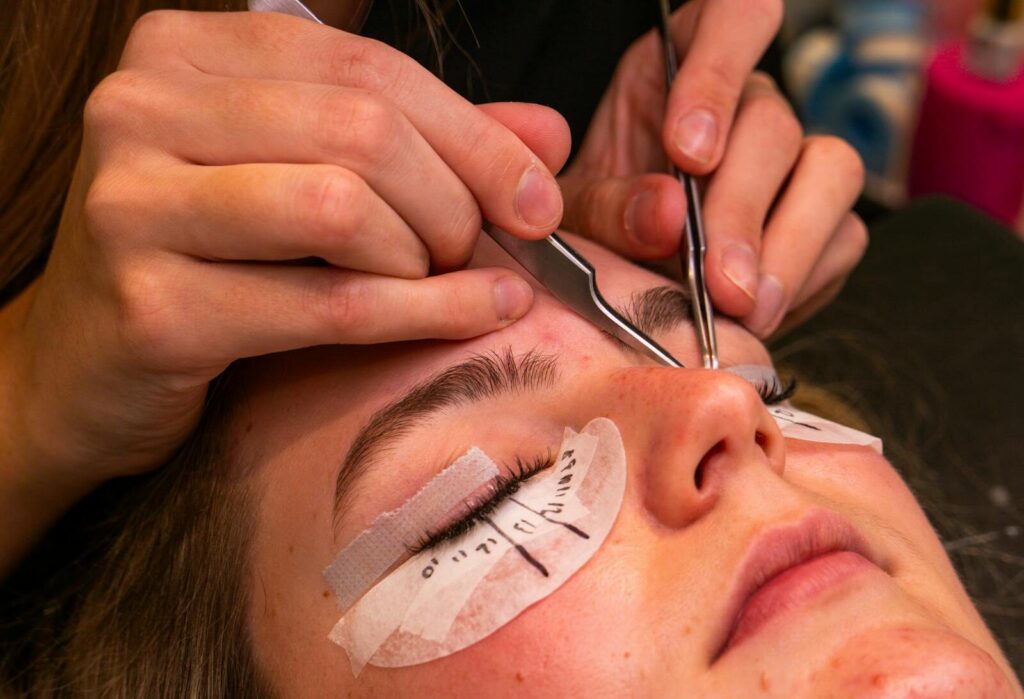
- Re-lash strategically. Fill gaps and extend the balance by applying new extensions to isolated lashes where needed. The technician should re-map based on your eye shape, curl type, and desired density, ensuring even dispersion from inner to outer corners.
- Check alignment, lash line symmetry, and comfort. After the correction, the artist should verify that each lash is isolated, that there’s no tugging or crowding, and that the overall feel is lightweight and natural to you.
- Discuss aftercare and maintenance for the corrected set. The technician should outline cleansing routines, sleep tips, and scheduling for your next refill so you can sustain the improved result without undoing the correction.
Repair work hinges on precise technique and clear communication. It’s common to need a short period of adjustment after the fix as your lashes settle into their new pattern and your eyes resume their normal cleansing and shedding. Treat the correction like a refinement rather than a rebuild, and you’re more likely to achieve a result that feels and looks intentional rather than patched.
Common mistakes during a repair—and how to avoid them
Over-removal and over-filling
Attempting to remove too many lashes or over-filling damaged areas can create a look that’s uneven or overly heavy in spots. The fix is to target only problem clusters, preserve healthy lash anchor points, and re-check every row of lashes for consistent isolation.
Ignoring lash health signals
Rushing a repair when there’s irritation, lash breakage, or signage of sensitivity risks worsening outcomes. Best practice is to pause and address any discomfort, possibly rescheduling the correction to prioritize lash health and safety.
Inconsistent mapping or arc creep
Without a cohesive lash map, corrected sets can feel lopsided. A thoughtful re-map aligns the line with your eye shape, ensuring inner corners don’t overproject and outer corners don’t sag. Consistent mapping yields a more natural, readable eye line.
”Consistency in mapping and isolation helps the repaired set look intentional, not accidental.”
Aftercare to protect a repaired set
Aftercare matters as much as the correction itself. Proper cleansing removes residue that can trap bacteria or oils, and it protects the adhesive bond. Nighttime habits—such as sleeping on your back or using a satin pillowcase—can minimize friction and reduce lash shedding between appointments. Oil-based cleansers or heavy waterproof mascara near the lash line can degrade the bond, so keep products away from the base of extensions. If you wear makeup, opt for gentle removal and avoid rubbing the eye area.
Consistency between appointments also plays a role. If your lifestyle involves frequent water exposure, workouts with sweat, or high ocular movement, you and your artist may decide on a shorter refill window or a more conservative fill strategy to maintain curl retention and isolation without stressing the natural lashes.
When to consider a fresh start versus a repair
Lifestyle, budget, and schedule considerations
Your time, budget, and daily routine influence whether a repair or a full restart makes more sense. Repairs save downtime and can be precisely targeted, but they require a skilled technician and a clear plan. A fresh set, while requiring more upkeep upfront, may offer a cleaner baseline and longer-lasting results for certain lash health scenarios or eye shapes.
Signs a repair might not be enough
Extensive lash shedding, widespread clumping, or ongoing discomfort after a repair suggests a deeper issue with the lash health or the bond itself. In these cases, a full removal and rebuild not only improves aesthetics but reduces the risk of repeated irritation or accelerated lash breakage.
For safety and accuracy, consider consulting a dermatologist or ophthalmology professional if you notice persistent irritation, unusual swelling, or changes in vision. Safety resources emphasize seeking professional guidance rather than delaying care (for example, the American Academy of Ophthalmology provides guidance on lash extension safety, and dermatology associations emphasize proper product use and removal). See reputable sources for more details: American Academy of Ophthalmology and American Academy of Dermatology.
Closing thoughts and next steps
When a bad lash set happens, the best path isn’t always to start from scratch. A careful, staged correction—led by a trained professional who understands lash health, isolation, and eye safety—can often salvage the look and preserve your natural lashes. The key is honest communication with your lash artist, realistic expectations about what a repair can achieve, and diligent aftercare that fits your lifestyle. If you’re in the Glen Rock, NJ area and want a precise, personalized plan for correcting a problematic set, consider scheduling a consultation at Estetica to map a targeted repair strategy that respects your eye health and your daily routine.